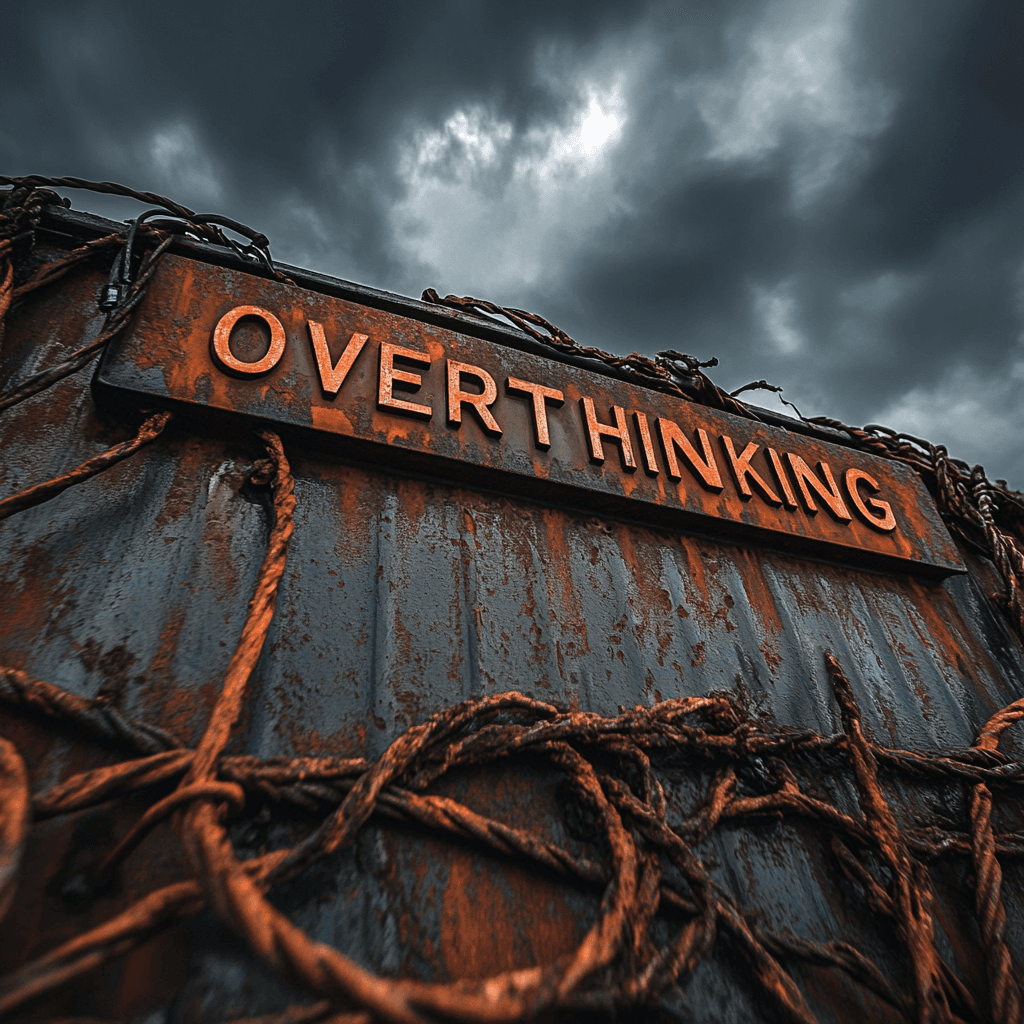
Congratulations, You're Burned Out!
How Performance Culture Turned Life Into a Speedrun
Hustle, Hurry, Burnout: Or how performance culture turned us all into stressed-out goldfish
Let’s be honest — most of us aren’t out here living life; we’re speed-running it like someone pressed fast-forward on our existence. We chase grades, titles, promotions, applause, and whatever shiny trophy society dangles in front of us, because apparently being a human isn’t enough — we must also be productive, impressive, and preferably Instagrammable.
Somewhere along the way, success stopped being about who we are and became entirely about what we can prove. Cute.
Performance vs. Process (and why I keep forgetting which one matters)
In performance culture, the scoreboard rules. Percentages, achievements, wins, “Did you hit the target?” Meanwhile, the process — the messy learning, the trying, the curiosity — is treated like the broccoli of personal development. Good for you, but boring.
Yet science kind of laughs in our faces here: humans thrive not when we perform perfectly, but when we engage deeply. Process > performance. Always. Studies prove it — even if my inner overachiever still wants a gold star for understanding that.
Our Nervous Systems Are Not Okay
When life becomes one big competition, your body basically lives in [fight-or-flight] Olympics. Cortisol spikes, anxiety hums like background music, and you start measuring your worth in deliverables. Too fun.
Research (McEwen, 2007) shows that chronic stress not only wrecks your health — it actually makes you worse at performing. Ah yes, the plot twist: in optimizing ourselves into machines, we become glitchy ones.
Comparison Culture: Where nobody wins but everyone participates
Festinger (1954) described this thing called social comparison theory — which is science speak for “we compare ourselves to literally everyone, constantly.” Social media turned that dial up to absurd. Now we don’t wonder Am I learning? We wonder Am I keeping up? Am I winning? Am I enough?
Spoiler: that question never ends well.
Creativity? Sorry, we killed it.
Creativity requires freedom to be messy. But when results are everything, failure becomes terrifying. Which means we stop experimenting, playing, or taking risks — you know, the things innovation is built from.
Harvard research (Amabile, 1996) confirms what every burnt-out creative already knows:
Pressure kills originality.
The Good News: There’s another way
(and it doesn’t involve a motivational poster)
We don’t have to abandon ambition — we just need to stop worshiping achievement like it’s a personality trait. A process-based life asks different questions:
Not Did I win? but Did I grow?Not Do people admire this? but Was I present for it?Not Am I better than them? but Am I kinder to myself today than yesterday?
You can even build in play — yes, play — because it turns out that joy is shockingly good for the brain. Flow states (Csikszentmihalyi, 1990) prove humans are happiest not when we achieve the goal, but when we’re absorbed in the doing.
Final Thought
Performance culture is like running a marathon on a treadmill: exhausting, repetitive, and — plot twist — you never actually get anywhere.
But when we shift from performance to process, something wild happens:
We burn less out.We create more freely.We feel more alive.
And ironically? We actually perform better.
Maybe the real win is quitting the need to win at all.