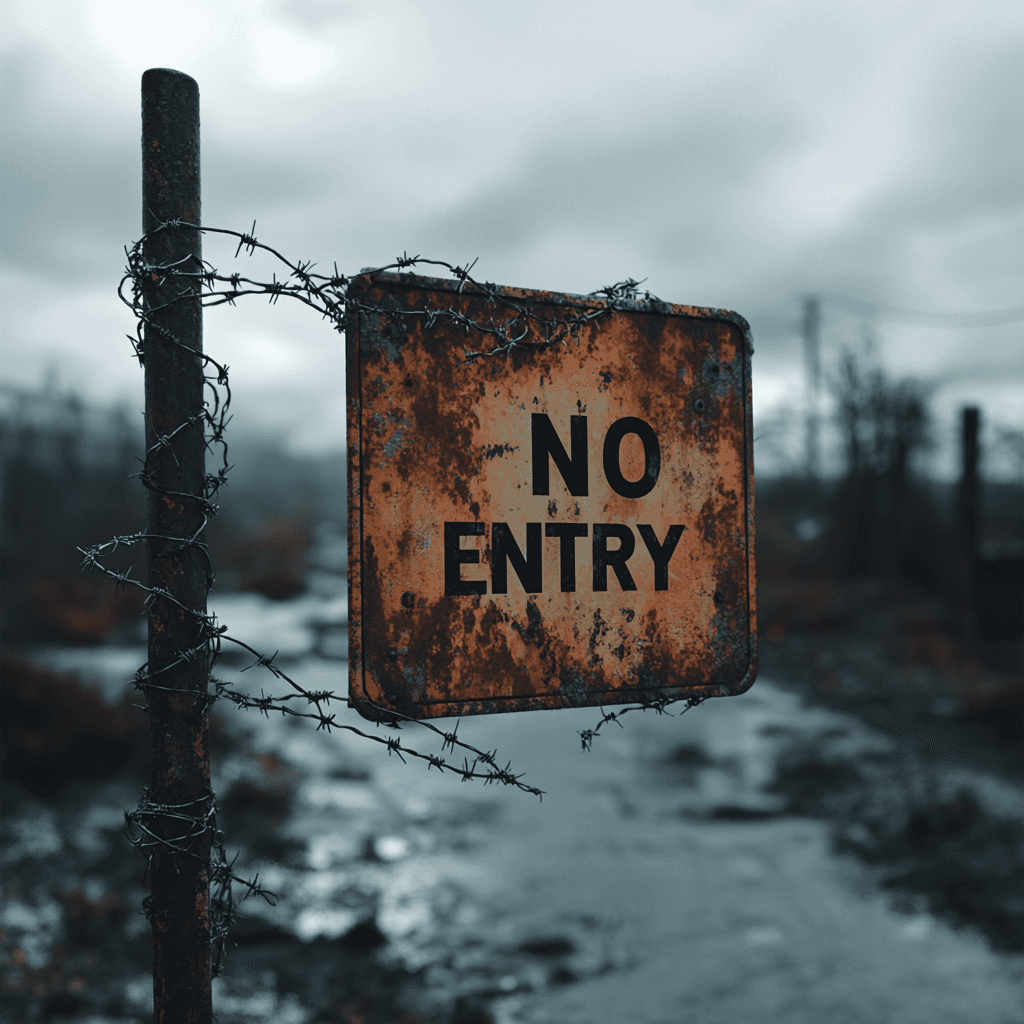
"Boundaries" is one of those words that's been in the wellness vocabulary long enough to have lost some of its edges. It's on candles. It's in Instagram bios. It's in every "how to deal with a toxic person" article that exists.
And yet, when it comes to the actual, specific, real-life moment of setting one — the moment where you need to tell another person that something is not okay with you — most people discover that understanding the concept and doing the thing are entirely different problems.
What a boundary actually is
A boundary is not a rule you enforce on other people. That's important to say first, because it's the most common misunderstanding.
You cannot set a boundary that dictates someone else's behaviour. You can only set a limit on what you will tolerate and what you will do in response. The boundary is about your actions, not theirs.
The difference:
- "You need to stop speaking to me that way" = request (reasonable, and worth making, but not a boundary)
- "If you speak to me that way, I'm going to leave the conversation" = boundary
The first puts the responsibility on the other person. The second puts it on you — specifically on the action you will take. A boundary only exists insofar as you're prepared to follow through on it.
Boundaries require you to be able and willing to do something, not just say something.
The emotional difficulty
This is where the listicles stop being useful.
Setting a boundary often involves:
- Disappointing someone
- Being perceived as difficult, cold, or selfish
- The very real possibility that they won't like it
- The risk that the relationship changes
- Your own guilt about all of the above
For people with a history of people-pleasing, high approval-seeking, or relationships where expressing limits wasn't safe, a boundary isn't just an awkward conversation. It activates a level of threat that's disproportionate to the actual stakes and completely understandable given the history.
The anxiety that comes with boundary-setting is not evidence that you shouldn't set the boundary. It's evidence that you've been in systems where the cost of doing so was high. That's data about your history, not about this situation.
How to set one (in practice)
Be specific. The vaguer the boundary, the easier it is for both parties to slide around it. "I need you to respect my time" is an aspiration. "I won't answer calls after 9pm" is a boundary with a shape.
Don't over-explain. A boundary is a statement of what you will and won't do. It doesn't require a detailed justification. The more you explain, the more you're implicitly asking for permission or approval, which defeats the purpose. State it simply. Let the discomfort sit.
Say what you'll do, not what they must stop. See above. Your actions are in your control. Theirs are not.
Follow through. This is the part that makes boundaries real rather than aspirational. If you said you'd leave the conversation and you don't, you've communicated that the boundary isn't actually a boundary. The follow-through doesn't have to be hostile. It just has to happen.
A boundary you consistently don't keep isn't a boundary. It's a preference you've announced.
On guilt
The guilt that follows setting a limit with someone who doesn't like it is extremely normal and is not, by itself, evidence that you did something wrong. Guilt is a feeling, not a verdict.
People who are used to access — to your time, your energy, your tolerance — will sometimes respond to limits with disappointment, anger, or the suggestion that you've changed. Sometimes they're right; you have changed. That's the point.
The discomfort of setting a boundary is real. The cost of not having one tends to compound over time in ways that are harder to trace.
You're allowed to take up space. You're allowed to have limits. This is not an advanced form of care. It's a prerequisite for it.